CEDAR MOUNTAIN • DEEP-EARTH PROVENANCE
Modern filtration can remove contaminants. It cannot create provenance.
Cedar Mountain begins with a different standard: water shaped by deep geological time, held within the Appalachian landscape, and defined by the mineral character of its source.
Short answer
"Pre-industrial" is not a romantic adjective — it describes a specific hydrogeological condition. Cedar Mountain's water infiltrated the aquifer before the Industrial Revolution, meaning it predates synthetic chemicals, PFAS, and modern agricultural runoff. The 300-meter shale confining layer has kept it isolated from the surface water cycle for centuries, making it one of the few commercially available waters that can credibly claim pre-industrial provenance.
Last updated: July 10, 2026
PROVENANCE OVER PROCESSING
Most conversations about drinking water start with treatment: filtration, purification, reverse osmosis, remineralization, or disinfection.
Those processes can be useful. But they also begin with a compromise: the water must first be corrected.
Cedar Mountain begins earlier. Its value is not created in a treatment system. It comes from source, residence time, geology, and the naturally occurring minerals collected as water moves through the earth.
This is the distinction between processed purity and source integrity.
Processed purity asks: What can be removed?
Source integrity asks: Where did this water come from, how was it protected, and what did the earth give it?
Why it matters for Cedar Mountain
Most premium waters are defined by what has been removed. Cedar Mountain is defined by what was never introduced. The non-detect results for PFAS, nitrates, lead, and mercury are not the product of advanced filtration — they are the product of a source that predates those contaminants. That is why provenance is not secondary to purity; it is purity, properly understood.
THE SCIENCE OF DEEP-EARTH PURITY
Two ideas matter most when evaluating the integrity of a mineral water source: residence time and hydrogeological isolation.
Residence time is the amount of time water spends underground before it returns to the surface or is drawn from the source. During that time, water moves through layers of rock and mineral-bearing geology. This slow contact gives natural mineral water its composition, texture, and taste. That is why mineral water cannot be understood only as H₂O — its identity comes from the path it has taken.
Hydrogeological isolation refers to the natural protection around a water source. Rock layers, depth, pressure, and geological structure can help shield a source from the volatility of modern surface conditions. The more protected the source, the more meaningful its provenance becomes. This is why source matters as much as purification — a protected aquifer is not merely a container. It is part of the water's character.
WHAT PRE-INDUSTRIAL WATER MEANS
Pre-industrial water refers to water whose source story is defined by deep-earth protection rather than modern surface exposure.
It does not mean a romantic return to the past. It means the water's identity is rooted in geology: rainfall, stone, pressure, time, and natural mineral exchange.
For Cedar Mountain, the point is simple:
FILTRATION VS. SOURCE
Filtration can make water safer. It can reduce unwanted contaminants. It can make municipal or surface-influenced water more suitable for drinking.
But filtration does not create a natural mineral profile. Reverse osmosis, for example, can strip water down to a nearly blank state. Many brands then add minerals back in for taste or balance. That may produce drinkable water, but it is not the same as naturally mineralized water from a geological source.
Cedar Mountain's position is different: the minerals are part of the water's origin.
A HYDROLOGIC TIME CAPSULE
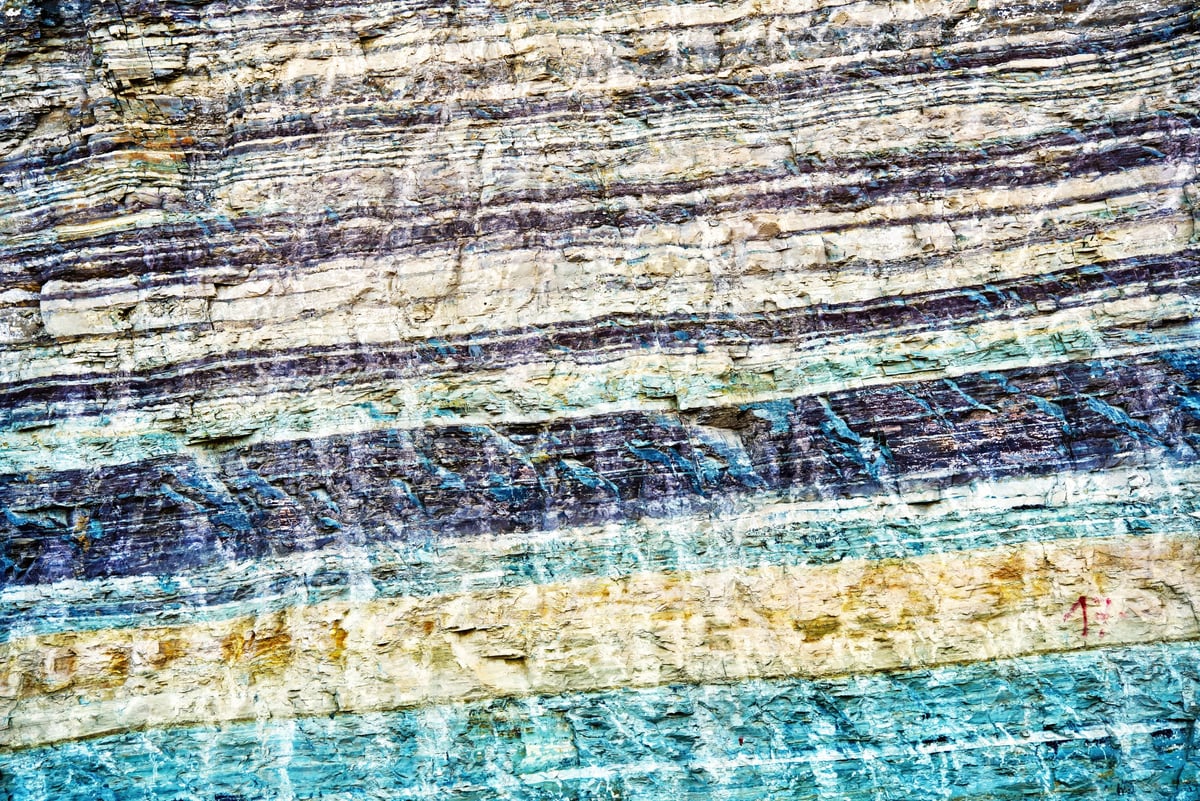
Every natural mineral water carries a record of place. Cedar Mountain reflects the Appalachian landscape: stone, slope, aquifer movement, and mineral contact over time. Its composition is not a formula applied after purification. It is the result of the water's journey.
That is why the phrase "pre-industrial" matters. It points to a standard older than modern processing: water protected by earth before it is presented in glass.
THE CEDAR MOUNTAIN STANDARD
Cedar Mountain is built around three principles:
The source must carry the value. Treatment should not be asked to manufacture identity.
Water should have a profile. TDS, pH, calcium, magnesium, bicarbonate, sodium, and silica are not incidental details. They define how the water feels, tastes, and performs.
Cedar Mountain is not anonymous bottled water. It is a specific water from a specific place, with a specific mineral composition and source story.
WHY IT MATTERS
Natural mineral water has texture. The mineral profile affects mouthfeel, finish, pairing, and the way water interacts with food, wine, coffee, and tea. A low-character water disappears. A heavily treated water can feel flat. A naturally mineralized water can create structure. Cedar Mountain's mineral composition gives it weight, clarity, and a quiet alkaline profile without relying on artificial enhancement.
The future of premium water will not be won by vague purity claims. It will be won by transparency:
Cedar Mountain answers those questions through source, analysis, and geological specificity.
IN SUMMARY
Pre-industrial water is water whose value comes from protected geological provenance rather than modern correction. Cedar Mountain's water is defined by its Pennsylvania source, natural mineral composition, and deep-earth character.
FREQUENTLY ASKED QUESTIONS
EXPLORE THE SOURCE
The mineral profile behind Cedar Mountain's source character — TDS, pH, and the naturally occurring elements that define its taste and texture.